Author: Fabrizio Ciancio

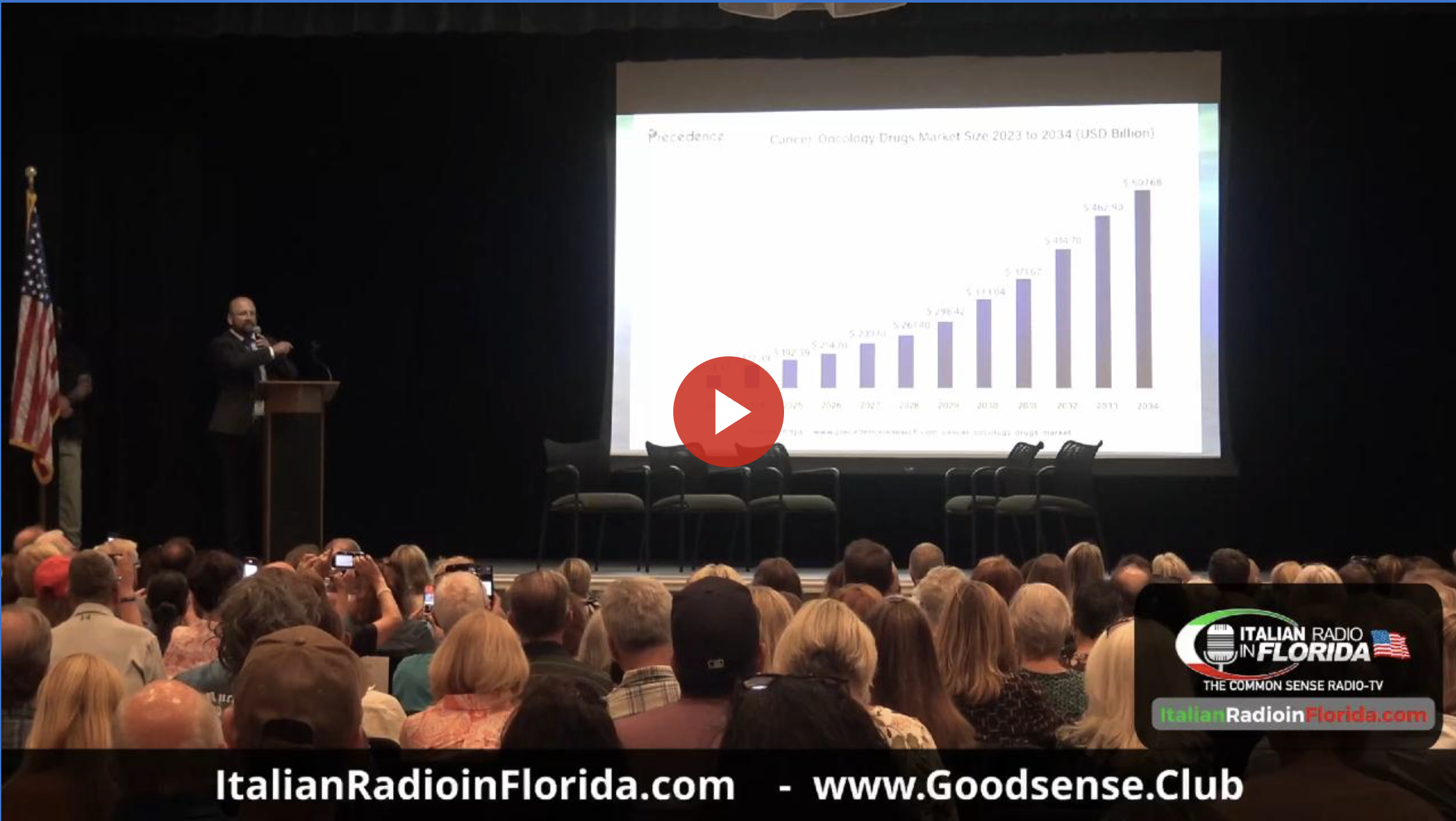
  • THE 3 BIG C’s: Courage, Censorship & Cancer [Thu, Oct 02 | Venice]

    THE 3 BIG C’s: Courage, Censorship & Cancer [Thu, Oct 02 | Venice]


    Why is cancer a $200 billion industry… yet patients and families are still suffering?
    Because real healing doesn’t come from creating lifelong customers.
    At this powerful gathering, we’re pulling back the curtain on the truths the Pharma Cartel doesn’t want you to hear — and honoring Florida’s Surgeon General, Dr. Joseph Ladapo, for his extraordinary courage in defending freedom and standing against medical mandates.

    What’s Inside:
    ⚡ Turbo Cancer — the surge of aggressive cancers emerging in recent years
    ⚡ Immune Deficiency — how immune collapse and cancer are intertwined
    ⚡ Suppressed Healing Approaches — solutions sidelined when they threaten profit over people

    Special Recognition
    Honoring Dr. Joseph Ladapo Award Presentation + Remarks

  • General Roberto Vannacci and Common Sense #9 The LGBTQ+++ Planet

    General Roberto Vannacci and Common Sense #9 The LGBTQ+++ Planet

    Listen here:

    The book’s table of contents indicates the following chapters:
    • Chapter I: Common Sense
    • Chapter II: Environmentalism
    • Chapter III: Energy
    • Chapter IV: The Multicultural and Multiethnic Society
    • Chapter V: Security and Legitimate Defense
    • Chapter VI: The Home
    • Chapter VII: The Family
    • Chapter VIII: The Homeland
    • Chapter IX: The LGBTQ+++ Planet
    • Chapter X: Taxes
    • Chapter XI: The New City
    • Chapter XII: Animalism


    TheAuthor:
    Roberto Vannacci
    Publication Year: 2023
    Core Thesis: The book presents a critique of contemporary Western society, arguing that it operates on an inverted logic (“Il Mondo al Contrario” – The World Upside Down) where common sense, traditional values, and established norms are undermined by progressive ideologies, political correctness, and the demands of vocal minorities. Vannacci, drawing on his extensive military experience in “recondite and unknown, poor, abandoned, degraded and often dangerous, but real” parts of the world, offers a stark contrast between what he perceives as the “true” world and the distorted reality of the “Occident.”

    Key Themes and Arguments:

    1. Erosion of Common Sense and Objective Reality:

    Vannacci argues that modern society, influenced by Cartesian self-reference (“Cogito ergo sum”), has become excessively subjective, prioritizing individual perceptions over objective reality and shared values. This leads to absurdities where:

    • Self-perception supersedes biological fact: “it doesn’t matter if I am a bearded, muscular, olive-skinned man, but if I perceive myself as a blonde, slender woman in need of protection, everyone must portray me in that way and, first and foremost, my identity documents!”
    • Conspiracy theories gain traction: Beliefs such as a flat Earth, staged moon landings, microchipped vaccines, and the non-existence of COVID-19 are presented as symptoms of this rejection of established facts.
    • Justice becomes relative: Squatters are granted rights over legitimate owners, and civil disobedience, even when causing public disruption and damage, is defended as dissent, often at the expense of others’ freedoms.

    2. Critique of Ideological Environmentalism:

    Vannacci distinguishes between “true” pragmatic environmentalism focused on human well-being and what he calls “ideological environmentalism,” which he views as a dogmatic, ascetic, and often hypocritical movement.

    • Anthropocentric view of nature: “It is humankind that must find a way to continue to live in symbiosis with the environment around it, exploiting all available resources to continuously increase its well-being over time.” Nature is not an isolated system to be preserved “regardless,” as this would mean abandoning progress (e.g., fighting smallpox, irrigation, urban settlements).
    • Climate change skepticism/pragmatism: While acknowledging human impact, Vannacci stresses that “Climate has always changed, since the origin of the Earth, and all living beings have adapted to these changes or have become extinct.” He criticizes apocalyptic narratives as financially motivated fear-mongering: “I, who am a bit malicious, believe that this obsessive mania of terrorizing us with apocalyptic prospects has other ends, always connected to vile money.”
    • Economic implications of “green” policies: He argues that European green policies are self-defeating, leading to deindustrialization and reliance on countries with higher pollution standards: “the green measures of the European Union have strongly contributed to transforming the Old Continent from a net producer to a net consumer of goods, destroying our productive capacity.”
    • Support for nuclear energy and GMOs: Vannacci advocates for nuclear power as a safe and reliable energy source, and genetically modified organisms (GMOs) for their potential to address food security challenges. He criticizes opposition to these technologies as irrational and driven by demagoguery, leading to Europe’s increased dependence on food imports and a return to more polluting energy sources like coal.
    • Hypocrisy of environmental demands: He points out that while Italians express climate concerns in surveys, they refuse to give up cars, heating, internet, or air travel, or pay significantly higher prices for these conveniences. He contrasts the “eco-anxiety” of some with real-world dangers (e.g., crime, war, natural disasters).

    3. Defense of National Sovereignty and Traditional Identity:

    Vannacci is a strong proponent of the nation-state, national identity, and traditional values, opposing multiculturalism, globalism, and any perceived dilution of Italian culture.

    • Importance of “Patria” (Homeland): He defines “Patria” as a multifaceted concept encompassing “land, tradition, memory, and sense of belonging to a community and a nation.” He views the concept of “citizen of the world” as inappropriate and non-existent, highlighting that wealth and well-being differ greatly between nations.
    • Critique of open borders and “ius soli”: He opposes policies that would weaken national borders and citizenship criteria based on birth on national soil (“ius soli”), arguing that citizenship should be a concession with clear requirements (language, history, constitution).
    • Protection of cultural heritage: Vannacci asserts the right and duty of every population to protect its origins and traditions from “derives and tangents that would denature them.” He argues that integration for immigrants means adapting to the host country’s culture, not the other way around: “The foreigner who does not integrate into the fabric of the land that welcomes him is no longer an immigrant but becomes an invader.”
    • Rejection of revisionist narratives: He criticizes attempts to “cancel the past” or “stupidly revise” historical narratives and fairy tales to be “inclusive” or “gender-neutral” as attempts to rewrite history and castrate language.

    4. The “LGBTQ+++” “Planet” and Gender Ideology:

    A significant portion of the book is dedicated to criticizing the LGBTQ+ movement and what Vannacci terms “gender ideology,” viewing it as a threat to normalcy and traditional family structures.

    • Homosexuality as “eccentricity”: He states that homosexuality is a “preference” or “predilection” that shouldn’t be controversial but implies it is an “eccentricity” that should not be flaunted.
    • Relativization of “normality”: He criticizes the LGBTQ+ community’s pursuit of “normality” for homosexuals, arguing that “normality” is defined by majority numbers and common custom. He sees efforts to include all identities under a single acronym (LGBTQ+++) as a denial of reality and a focus on negation (rejection of heterosexuality).
    • Rejection of gender fluidity and “schwa”: He vehemently opposes the concept of gender fluidity and the use of gender-neutral language (e.g., schwa, asterisks), considering it a “castration” and “deturpation” of the Italian language and an attempt to “destroy every rule and relativize any fact, event, and circumstance to demonstrate that models do not exist.”
    • Defense of the “natural family”: Vannacci argues that the “natural family” (composed of a biological mother and father) is a “winning model” provided by nature, and that the concept of a “right to parenthood” does not exist in nature. He states that children “biologically need a father and a mother.”
    • Critique of “career alias” in schools: He ridicules the concept of “career alias” (chosen name for gender identity in schools) as diseducative and superficial, allowing students to choose a sex “like choosing a pair of pants or a t-shirt,” without proper medical or psychological evaluation.
    • Opposition to “hate crime” legislation: He argues against laws that assign harsher penalties for crimes based on the victim’s sexual orientation, race, or gender, asserting that all individuals should be equally protected by law and that “ideas, opinions, thoughts, convictions… are defeated on the plane of argumentation and not in courtrooms.”

    5. Public Safety and Self-Defense:

    Vannacci expresses deep concern about declining public safety and a justice system that, in his view, prioritizes criminals over victims and legitimate citizens.

    • Critique of judicial leniency: He describes a “World Upside Down” where “the privacy of thieves is the new frontier of political correctness,” and minor offenses like shoplifting are often dismissed as “too minor.” He cites San Francisco as an example of a city where progressive judicial policies have led to widespread crime and a decline in quality of life.
    • Support for legitimate self-defense: He argues that citizens should have the right to defend themselves, their families, and their property, especially when the state fails to prevent crime. He contends that self-defense should “always be considered legitimate,” as the aggressor always has the advantage.
    • Broadening self-defense parameters: He calls for extending the presumption of proportionality in self-defense, currently applicable to home invasions, to other public spaces.
    • Ineffectiveness of current policies: He claims that policies like “citizen’s income” (welfare) are exploited by “scoundrels and fraudsters” and that effective crime reduction comes from visible law enforcement and strict penalties, not ideological approaches.

    6. Taxation and Economic Policy:

    Vannacci criticizes current tax policies, particularly those aimed at redistributing wealth, arguing they are counterproductive and stifle economic growth and meritocracy.

    • Against “luxury taxes” and wealth redistribution: He argues that taxes on luxury goods (supercars, yachts) are “demagogic” and “counterproductive,” driving away wealth and hurting industries. He cites examples from Italy and France where such taxes failed to meet revenue targets and caused economic harm.
    • Critique of inheritance tax: He highlights that inheritance tax often represents a “fifth taxation of the same asset,” discouraging work and savings.
    • Promoting wealth creation over redistribution: He argues that “a State that merely redistributes wealth curbs development, discourages enterprise, frightens the bold, flattens society and crushes it while simultaneously incentivizing cosmic apathy.” Instead, the state should “create opportunities, combat illegality and delinquency, rapidly guarantee justice and the rule of law, favor free enterprise, incentivize the meritorious, spur the willing and emphasize the differences between those who commit themselves and those who tend to live off the work of others.”

    7. Urban Planning and Waste Management:

    Vannacci extends his critique to urban management, particularly “green” initiatives, which he sees as impractical and detrimental to ordinary citizens.

    • Critique of restricted traffic zones (ZTLs): He argues against implementing large ZTLs in cities like Rome without first establishing an efficient public transport network, viewing it as a burden on middle and lower classes who rely on older vehicles.
    • Ineffectiveness of waste management policies: He criticizes door-to-door waste collection and ecotaxes as inefficient and costly for citizens, while public decorum declines.

    Author’s Stance and Tone:

    Vannacci presents himself as a pragmatic, common-sense observer drawing on real-world experience, particularly from his military career. The tone is often confrontational, direct, and critical of what he perceives as progressive “dogmas” and “idiocies.” He frequently uses phrases like “Mondo al Contrario” (World Upside Down) and “ribaltatori della realtà” (reality subverters) to underscore his central argument. He positions his views as rooted in tangible reality, historical precedent, and natural laws, in contrast to what he sees as abstract, ideological, and harmful trends in Western society. He acknowledges the controversial nature of his opinions, particularly on LGBTQ+ issues, but asserts his right to express them.


  • General Roberto Vannacci and Common Sense #8 The Homeland

    General Roberto Vannacci and Common Sense #8 The Homeland

    Listen here:

    The book’s table of contents indicates the following chapters:
    • Chapter I: Common Sense
    • Chapter II: Environmentalism
    • Chapter III: Energy
    • Chapter IV: The Multicultural and Multiethnic Society
    • Chapter V: Security and Legitimate Defense
    • Chapter VI: The Home
    • Chapter VII: The Family
    • Chapter VIII: The Homeland
    • Chapter IX: The LGBTQ+++ Planet
    • Chapter X: Taxes
    • Chapter XI: The New City
    • Chapter XII: Animalism


    TheAuthor:
    Roberto Vannacci
    Publication Year: 2023
    Core Thesis: The book presents a critique of contemporary Western society, arguing that it operates on an inverted logic (“Il Mondo al Contrario” – The World Upside Down) where common sense, traditional values, and established norms are undermined by progressive ideologies, political correctness, and the demands of vocal minorities. Vannacci, drawing on his extensive military experience in “recondite and unknown, poor, abandoned, degraded and often dangerous, but real” parts of the world, offers a stark contrast between what he perceives as the “true” world and the distorted reality of the “Occident.”

    Key Themes and Arguments:

    1. Erosion of Common Sense and Objective Reality:

    Vannacci argues that modern society, influenced by Cartesian self-reference (“Cogito ergo sum”), has become excessively subjective, prioritizing individual perceptions over objective reality and shared values. This leads to absurdities where:

    • Self-perception supersedes biological fact: “it doesn’t matter if I am a bearded, muscular, olive-skinned man, but if I perceive myself as a blonde, slender woman in need of protection, everyone must portray me in that way and, first and foremost, my identity documents!”
    • Conspiracy theories gain traction: Beliefs such as a flat Earth, staged moon landings, microchipped vaccines, and the non-existence of COVID-19 are presented as symptoms of this rejection of established facts.
    • Justice becomes relative: Squatters are granted rights over legitimate owners, and civil disobedience, even when causing public disruption and damage, is defended as dissent, often at the expense of others’ freedoms.

    2. Critique of Ideological Environmentalism:

    Vannacci distinguishes between “true” pragmatic environmentalism focused on human well-being and what he calls “ideological environmentalism,” which he views as a dogmatic, ascetic, and often hypocritical movement.

    • Anthropocentric view of nature: “It is humankind that must find a way to continue to live in symbiosis with the environment around it, exploiting all available resources to continuously increase its well-being over time.” Nature is not an isolated system to be preserved “regardless,” as this would mean abandoning progress (e.g., fighting smallpox, irrigation, urban settlements).
    • Climate change skepticism/pragmatism: While acknowledging human impact, Vannacci stresses that “Climate has always changed, since the origin of the Earth, and all living beings have adapted to these changes or have become extinct.” He criticizes apocalyptic narratives as financially motivated fear-mongering: “I, who am a bit malicious, believe that this obsessive mania of terrorizing us with apocalyptic prospects has other ends, always connected to vile money.”
    • Economic implications of “green” policies: He argues that European green policies are self-defeating, leading to deindustrialization and reliance on countries with higher pollution standards: “the green measures of the European Union have strongly contributed to transforming the Old Continent from a net producer to a net consumer of goods, destroying our productive capacity.”
    • Support for nuclear energy and GMOs: Vannacci advocates for nuclear power as a safe and reliable energy source, and genetically modified organisms (GMOs) for their potential to address food security challenges. He criticizes opposition to these technologies as irrational and driven by demagoguery, leading to Europe’s increased dependence on food imports and a return to more polluting energy sources like coal.
    • Hypocrisy of environmental demands: He points out that while Italians express climate concerns in surveys, they refuse to give up cars, heating, internet, or air travel, or pay significantly higher prices for these conveniences. He contrasts the “eco-anxiety” of some with real-world dangers (e.g., crime, war, natural disasters).

    3. Defense of National Sovereignty and Traditional Identity:

    Vannacci is a strong proponent of the nation-state, national identity, and traditional values, opposing multiculturalism, globalism, and any perceived dilution of Italian culture.

    • Importance of “Patria” (Homeland): He defines “Patria” as a multifaceted concept encompassing “land, tradition, memory, and sense of belonging to a community and a nation.” He views the concept of “citizen of the world” as inappropriate and non-existent, highlighting that wealth and well-being differ greatly between nations.
    • Critique of open borders and “ius soli”: He opposes policies that would weaken national borders and citizenship criteria based on birth on national soil (“ius soli”), arguing that citizenship should be a concession with clear requirements (language, history, constitution).
    • Protection of cultural heritage: Vannacci asserts the right and duty of every population to protect its origins and traditions from “derives and tangents that would denature them.” He argues that integration for immigrants means adapting to the host country’s culture, not the other way around: “The foreigner who does not integrate into the fabric of the land that welcomes him is no longer an immigrant but becomes an invader.”
    • Rejection of revisionist narratives: He criticizes attempts to “cancel the past” or “stupidly revise” historical narratives and fairy tales to be “inclusive” or “gender-neutral” as attempts to rewrite history and castrate language.

    4. The “LGBTQ+++” “Planet” and Gender Ideology:

    A significant portion of the book is dedicated to criticizing the LGBTQ+ movement and what Vannacci terms “gender ideology,” viewing it as a threat to normalcy and traditional family structures.

    • Homosexuality as “eccentricity”: He states that homosexuality is a “preference” or “predilection” that shouldn’t be controversial but implies it is an “eccentricity” that should not be flaunted.
    • Relativization of “normality”: He criticizes the LGBTQ+ community’s pursuit of “normality” for homosexuals, arguing that “normality” is defined by majority numbers and common custom. He sees efforts to include all identities under a single acronym (LGBTQ+++) as a denial of reality and a focus on negation (rejection of heterosexuality).
    • Rejection of gender fluidity and “schwa”: He vehemently opposes the concept of gender fluidity and the use of gender-neutral language (e.g., schwa, asterisks), considering it a “castration” and “deturpation” of the Italian language and an attempt to “destroy every rule and relativize any fact, event, and circumstance to demonstrate that models do not exist.”
    • Defense of the “natural family”: Vannacci argues that the “natural family” (composed of a biological mother and father) is a “winning model” provided by nature, and that the concept of a “right to parenthood” does not exist in nature. He states that children “biologically need a father and a mother.”
    • Critique of “career alias” in schools: He ridicules the concept of “career alias” (chosen name for gender identity in schools) as diseducative and superficial, allowing students to choose a sex “like choosing a pair of pants or a t-shirt,” without proper medical or psychological evaluation.
    • Opposition to “hate crime” legislation: He argues against laws that assign harsher penalties for crimes based on the victim’s sexual orientation, race, or gender, asserting that all individuals should be equally protected by law and that “ideas, opinions, thoughts, convictions… are defeated on the plane of argumentation and not in courtrooms.”

    5. Public Safety and Self-Defense:

    Vannacci expresses deep concern about declining public safety and a justice system that, in his view, prioritizes criminals over victims and legitimate citizens.

    • Critique of judicial leniency: He describes a “World Upside Down” where “the privacy of thieves is the new frontier of political correctness,” and minor offenses like shoplifting are often dismissed as “too minor.” He cites San Francisco as an example of a city where progressive judicial policies have led to widespread crime and a decline in quality of life.
    • Support for legitimate self-defense: He argues that citizens should have the right to defend themselves, their families, and their property, especially when the state fails to prevent crime. He contends that self-defense should “always be considered legitimate,” as the aggressor always has the advantage.
    • Broadening self-defense parameters: He calls for extending the presumption of proportionality in self-defense, currently applicable to home invasions, to other public spaces.
    • Ineffectiveness of current policies: He claims that policies like “citizen’s income” (welfare) are exploited by “scoundrels and fraudsters” and that effective crime reduction comes from visible law enforcement and strict penalties, not ideological approaches.

    6. Taxation and Economic Policy:

    Vannacci criticizes current tax policies, particularly those aimed at redistributing wealth, arguing they are counterproductive and stifle economic growth and meritocracy.

    • Against “luxury taxes” and wealth redistribution: He argues that taxes on luxury goods (supercars, yachts) are “demagogic” and “counterproductive,” driving away wealth and hurting industries. He cites examples from Italy and France where such taxes failed to meet revenue targets and caused economic harm.
    • Critique of inheritance tax: He highlights that inheritance tax often represents a “fifth taxation of the same asset,” discouraging work and savings.
    • Promoting wealth creation over redistribution: He argues that “a State that merely redistributes wealth curbs development, discourages enterprise, frightens the bold, flattens society and crushes it while simultaneously incentivizing cosmic apathy.” Instead, the state should “create opportunities, combat illegality and delinquency, rapidly guarantee justice and the rule of law, favor free enterprise, incentivize the meritorious, spur the willing and emphasize the differences between those who commit themselves and those who tend to live off the work of others.”

    7. Urban Planning and Waste Management:

    Vannacci extends his critique to urban management, particularly “green” initiatives, which he sees as impractical and detrimental to ordinary citizens.

    • Critique of restricted traffic zones (ZTLs): He argues against implementing large ZTLs in cities like Rome without first establishing an efficient public transport network, viewing it as a burden on middle and lower classes who rely on older vehicles.
    • Ineffectiveness of waste management policies: He criticizes door-to-door waste collection and ecotaxes as inefficient and costly for citizens, while public decorum declines.

    Author’s Stance and Tone:

    Vannacci presents himself as a pragmatic, common-sense observer drawing on real-world experience, particularly from his military career. The tone is often confrontational, direct, and critical of what he perceives as progressive “dogmas” and “idiocies.” He frequently uses phrases like “Mondo al Contrario” (World Upside Down) and “ribaltatori della realtà” (reality subverters) to underscore his central argument. He positions his views as rooted in tangible reality, historical precedent, and natural laws, in contrast to what he sees as abstract, ideological, and harmful trends in Western society. He acknowledges the controversial nature of his opinions, particularly on LGBTQ+ issues, but asserts his right to express them.


  • General Roberto Vannacci and Common Sense #7 The Family

    General Roberto Vannacci and Common Sense #7 The Family

    Listen here:

    The book’s table of contents indicates the following chapters:
    • Chapter I: Common Sense
    • Chapter II: Environmentalism
    • Chapter III: Energy
    • Chapter IV: The Multicultural and Multiethnic Society
    • Chapter V: Security and Legitimate Defense
    • Chapter VI: The Home
    • Chapter VII: The Family
    • Chapter VIII: The Homeland
    • Chapter IX: The LGBTQ+++ Planet
    • Chapter X: Taxes
    • Chapter XI: The New City
    • Chapter XII: Animalism


    TheAuthor:
    Roberto Vannacci
    Publication Year: 2023
    Core Thesis: The book presents a critique of contemporary Western society, arguing that it operates on an inverted logic (“Il Mondo al Contrario” – The World Upside Down) where common sense, traditional values, and established norms are undermined by progressive ideologies, political correctness, and the demands of vocal minorities. Vannacci, drawing on his extensive military experience in “recondite and unknown, poor, abandoned, degraded and often dangerous, but real” parts of the world, offers a stark contrast between what he perceives as the “true” world and the distorted reality of the “Occident.”

    Key Themes and Arguments:

    1. Erosion of Common Sense and Objective Reality:

    Vannacci argues that modern society, influenced by Cartesian self-reference (“Cogito ergo sum”), has become excessively subjective, prioritizing individual perceptions over objective reality and shared values. This leads to absurdities where:

    • Self-perception supersedes biological fact: “it doesn’t matter if I am a bearded, muscular, olive-skinned man, but if I perceive myself as a blonde, slender woman in need of protection, everyone must portray me in that way and, first and foremost, my identity documents!”
    • Conspiracy theories gain traction: Beliefs such as a flat Earth, staged moon landings, microchipped vaccines, and the non-existence of COVID-19 are presented as symptoms of this rejection of established facts.
    • Justice becomes relative: Squatters are granted rights over legitimate owners, and civil disobedience, even when causing public disruption and damage, is defended as dissent, often at the expense of others’ freedoms.

    2. Critique of Ideological Environmentalism:

    Vannacci distinguishes between “true” pragmatic environmentalism focused on human well-being and what he calls “ideological environmentalism,” which he views as a dogmatic, ascetic, and often hypocritical movement.

    • Anthropocentric view of nature: “It is humankind that must find a way to continue to live in symbiosis with the environment around it, exploiting all available resources to continuously increase its well-being over time.” Nature is not an isolated system to be preserved “regardless,” as this would mean abandoning progress (e.g., fighting smallpox, irrigation, urban settlements).
    • Climate change skepticism/pragmatism: While acknowledging human impact, Vannacci stresses that “Climate has always changed, since the origin of the Earth, and all living beings have adapted to these changes or have become extinct.” He criticizes apocalyptic narratives as financially motivated fear-mongering: “I, who am a bit malicious, believe that this obsessive mania of terrorizing us with apocalyptic prospects has other ends, always connected to vile money.”
    • Economic implications of “green” policies: He argues that European green policies are self-defeating, leading to deindustrialization and reliance on countries with higher pollution standards: “the green measures of the European Union have strongly contributed to transforming the Old Continent from a net producer to a net consumer of goods, destroying our productive capacity.”
    • Support for nuclear energy and GMOs: Vannacci advocates for nuclear power as a safe and reliable energy source, and genetically modified organisms (GMOs) for their potential to address food security challenges. He criticizes opposition to these technologies as irrational and driven by demagoguery, leading to Europe’s increased dependence on food imports and a return to more polluting energy sources like coal.
    • Hypocrisy of environmental demands: He points out that while Italians express climate concerns in surveys, they refuse to give up cars, heating, internet, or air travel, or pay significantly higher prices for these conveniences. He contrasts the “eco-anxiety” of some with real-world dangers (e.g., crime, war, natural disasters).

    3. Defense of National Sovereignty and Traditional Identity:

    Vannacci is a strong proponent of the nation-state, national identity, and traditional values, opposing multiculturalism, globalism, and any perceived dilution of Italian culture.

    • Importance of “Patria” (Homeland): He defines “Patria” as a multifaceted concept encompassing “land, tradition, memory, and sense of belonging to a community and a nation.” He views the concept of “citizen of the world” as inappropriate and non-existent, highlighting that wealth and well-being differ greatly between nations.
    • Critique of open borders and “ius soli”: He opposes policies that would weaken national borders and citizenship criteria based on birth on national soil (“ius soli”), arguing that citizenship should be a concession with clear requirements (language, history, constitution).
    • Protection of cultural heritage: Vannacci asserts the right and duty of every population to protect its origins and traditions from “derives and tangents that would denature them.” He argues that integration for immigrants means adapting to the host country’s culture, not the other way around: “The foreigner who does not integrate into the fabric of the land that welcomes him is no longer an immigrant but becomes an invader.”
    • Rejection of revisionist narratives: He criticizes attempts to “cancel the past” or “stupidly revise” historical narratives and fairy tales to be “inclusive” or “gender-neutral” as attempts to rewrite history and castrate language.

    4. The “LGBTQ+++” “Planet” and Gender Ideology:

    A significant portion of the book is dedicated to criticizing the LGBTQ+ movement and what Vannacci terms “gender ideology,” viewing it as a threat to normalcy and traditional family structures.

    • Homosexuality as “eccentricity”: He states that homosexuality is a “preference” or “predilection” that shouldn’t be controversial but implies it is an “eccentricity” that should not be flaunted.
    • Relativization of “normality”: He criticizes the LGBTQ+ community’s pursuit of “normality” for homosexuals, arguing that “normality” is defined by majority numbers and common custom. He sees efforts to include all identities under a single acronym (LGBTQ+++) as a denial of reality and a focus on negation (rejection of heterosexuality).
    • Rejection of gender fluidity and “schwa”: He vehemently opposes the concept of gender fluidity and the use of gender-neutral language (e.g., schwa, asterisks), considering it a “castration” and “deturpation” of the Italian language and an attempt to “destroy every rule and relativize any fact, event, and circumstance to demonstrate that models do not exist.”
    • Defense of the “natural family”: Vannacci argues that the “natural family” (composed of a biological mother and father) is a “winning model” provided by nature, and that the concept of a “right to parenthood” does not exist in nature. He states that children “biologically need a father and a mother.”
    • Critique of “career alias” in schools: He ridicules the concept of “career alias” (chosen name for gender identity in schools) as diseducative and superficial, allowing students to choose a sex “like choosing a pair of pants or a t-shirt,” without proper medical or psychological evaluation.
    • Opposition to “hate crime” legislation: He argues against laws that assign harsher penalties for crimes based on the victim’s sexual orientation, race, or gender, asserting that all individuals should be equally protected by law and that “ideas, opinions, thoughts, convictions… are defeated on the plane of argumentation and not in courtrooms.”

    5. Public Safety and Self-Defense:

    Vannacci expresses deep concern about declining public safety and a justice system that, in his view, prioritizes criminals over victims and legitimate citizens.

    • Critique of judicial leniency: He describes a “World Upside Down” where “the privacy of thieves is the new frontier of political correctness,” and minor offenses like shoplifting are often dismissed as “too minor.” He cites San Francisco as an example of a city where progressive judicial policies have led to widespread crime and a decline in quality of life.
    • Support for legitimate self-defense: He argues that citizens should have the right to defend themselves, their families, and their property, especially when the state fails to prevent crime. He contends that self-defense should “always be considered legitimate,” as the aggressor always has the advantage.
    • Broadening self-defense parameters: He calls for extending the presumption of proportionality in self-defense, currently applicable to home invasions, to other public spaces.
    • Ineffectiveness of current policies: He claims that policies like “citizen’s income” (welfare) are exploited by “scoundrels and fraudsters” and that effective crime reduction comes from visible law enforcement and strict penalties, not ideological approaches.

    6. Taxation and Economic Policy:

    Vannacci criticizes current tax policies, particularly those aimed at redistributing wealth, arguing they are counterproductive and stifle economic growth and meritocracy.

    • Against “luxury taxes” and wealth redistribution: He argues that taxes on luxury goods (supercars, yachts) are “demagogic” and “counterproductive,” driving away wealth and hurting industries. He cites examples from Italy and France where such taxes failed to meet revenue targets and caused economic harm.
    • Critique of inheritance tax: He highlights that inheritance tax often represents a “fifth taxation of the same asset,” discouraging work and savings.
    • Promoting wealth creation over redistribution: He argues that “a State that merely redistributes wealth curbs development, discourages enterprise, frightens the bold, flattens society and crushes it while simultaneously incentivizing cosmic apathy.” Instead, the state should “create opportunities, combat illegality and delinquency, rapidly guarantee justice and the rule of law, favor free enterprise, incentivize the meritorious, spur the willing and emphasize the differences between those who commit themselves and those who tend to live off the work of others.”

    7. Urban Planning and Waste Management:

    Vannacci extends his critique to urban management, particularly “green” initiatives, which he sees as impractical and detrimental to ordinary citizens.

    • Critique of restricted traffic zones (ZTLs): He argues against implementing large ZTLs in cities like Rome without first establishing an efficient public transport network, viewing it as a burden on middle and lower classes who rely on older vehicles.
    • Ineffectiveness of waste management policies: He criticizes door-to-door waste collection and ecotaxes as inefficient and costly for citizens, while public decorum declines.

    Author’s Stance and Tone:

    Vannacci presents himself as a pragmatic, common-sense observer drawing on real-world experience, particularly from his military career. The tone is often confrontational, direct, and critical of what he perceives as progressive “dogmas” and “idiocies.” He frequently uses phrases like “Mondo al Contrario” (World Upside Down) and “ribaltatori della realtà” (reality subverters) to underscore his central argument. He positions his views as rooted in tangible reality, historical precedent, and natural laws, in contrast to what he sees as abstract, ideological, and harmful trends in Western society. He acknowledges the controversial nature of his opinions, particularly on LGBTQ+ issues, but asserts his right to express them.


  • General Roberto Vannacci and Common Sense #6 The Home

    General Roberto Vannacci and Common Sense #6 The Home

    Listen here:

    The book’s table of contents indicates the following chapters:
    • Chapter I: Common Sense
    • Chapter II: Environmentalism
    • Chapter III: Energy
    • Chapter IV: The Multicultural and Multiethnic Society
    • Chapter V: Security and Legitimate Defense
    • Chapter VI: The Home
    • Chapter VII: The Family
    • Chapter VIII: The Homeland
    • Chapter IX: The LGBTQ+++ Planet
    • Chapter X: Taxes
    • Chapter XI: The New City
    • Chapter XII: Animalism


    TheAuthor:
    Roberto Vannacci
    Publication Year: 2023
    Core Thesis: The book presents a critique of contemporary Western society, arguing that it operates on an inverted logic (“Il Mondo al Contrario” – The World Upside Down) where common sense, traditional values, and established norms are undermined by progressive ideologies, political correctness, and the demands of vocal minorities. Vannacci, drawing on his extensive military experience in “recondite and unknown, poor, abandoned, degraded and often dangerous, but real” parts of the world, offers a stark contrast between what he perceives as the “true” world and the distorted reality of the “Occident.”

    Key Themes and Arguments:

    1. Erosion of Common Sense and Objective Reality:

    Vannacci argues that modern society, influenced by Cartesian self-reference (“Cogito ergo sum”), has become excessively subjective, prioritizing individual perceptions over objective reality and shared values. This leads to absurdities where:

    • Self-perception supersedes biological fact: “it doesn’t matter if I am a bearded, muscular, olive-skinned man, but if I perceive myself as a blonde, slender woman in need of protection, everyone must portray me in that way and, first and foremost, my identity documents!”
    • Conspiracy theories gain traction: Beliefs such as a flat Earth, staged moon landings, microchipped vaccines, and the non-existence of COVID-19 are presented as symptoms of this rejection of established facts.
    • Justice becomes relative: Squatters are granted rights over legitimate owners, and civil disobedience, even when causing public disruption and damage, is defended as dissent, often at the expense of others’ freedoms.

    2. Critique of Ideological Environmentalism:

    Vannacci distinguishes between “true” pragmatic environmentalism focused on human well-being and what he calls “ideological environmentalism,” which he views as a dogmatic, ascetic, and often hypocritical movement.

    • Anthropocentric view of nature: “It is humankind that must find a way to continue to live in symbiosis with the environment around it, exploiting all available resources to continuously increase its well-being over time.” Nature is not an isolated system to be preserved “regardless,” as this would mean abandoning progress (e.g., fighting smallpox, irrigation, urban settlements).
    • Climate change skepticism/pragmatism: While acknowledging human impact, Vannacci stresses that “Climate has always changed, since the origin of the Earth, and all living beings have adapted to these changes or have become extinct.” He criticizes apocalyptic narratives as financially motivated fear-mongering: “I, who am a bit malicious, believe that this obsessive mania of terrorizing us with apocalyptic prospects has other ends, always connected to vile money.”
    • Economic implications of “green” policies: He argues that European green policies are self-defeating, leading to deindustrialization and reliance on countries with higher pollution standards: “the green measures of the European Union have strongly contributed to transforming the Old Continent from a net producer to a net consumer of goods, destroying our productive capacity.”
    • Support for nuclear energy and GMOs: Vannacci advocates for nuclear power as a safe and reliable energy source, and genetically modified organisms (GMOs) for their potential to address food security challenges. He criticizes opposition to these technologies as irrational and driven by demagoguery, leading to Europe’s increased dependence on food imports and a return to more polluting energy sources like coal.
    • Hypocrisy of environmental demands: He points out that while Italians express climate concerns in surveys, they refuse to give up cars, heating, internet, or air travel, or pay significantly higher prices for these conveniences. He contrasts the “eco-anxiety” of some with real-world dangers (e.g., crime, war, natural disasters).

    3. Defense of National Sovereignty and Traditional Identity:

    Vannacci is a strong proponent of the nation-state, national identity, and traditional values, opposing multiculturalism, globalism, and any perceived dilution of Italian culture.

    • Importance of “Patria” (Homeland): He defines “Patria” as a multifaceted concept encompassing “land, tradition, memory, and sense of belonging to a community and a nation.” He views the concept of “citizen of the world” as inappropriate and non-existent, highlighting that wealth and well-being differ greatly between nations.
    • Critique of open borders and “ius soli”: He opposes policies that would weaken national borders and citizenship criteria based on birth on national soil (“ius soli”), arguing that citizenship should be a concession with clear requirements (language, history, constitution).
    • Protection of cultural heritage: Vannacci asserts the right and duty of every population to protect its origins and traditions from “derives and tangents that would denature them.” He argues that integration for immigrants means adapting to the host country’s culture, not the other way around: “The foreigner who does not integrate into the fabric of the land that welcomes him is no longer an immigrant but becomes an invader.”
    • Rejection of revisionist narratives: He criticizes attempts to “cancel the past” or “stupidly revise” historical narratives and fairy tales to be “inclusive” or “gender-neutral” as attempts to rewrite history and castrate language.

    4. The “LGBTQ+++” “Planet” and Gender Ideology:

    A significant portion of the book is dedicated to criticizing the LGBTQ+ movement and what Vannacci terms “gender ideology,” viewing it as a threat to normalcy and traditional family structures.

    • Homosexuality as “eccentricity”: He states that homosexuality is a “preference” or “predilection” that shouldn’t be controversial but implies it is an “eccentricity” that should not be flaunted.
    • Relativization of “normality”: He criticizes the LGBTQ+ community’s pursuit of “normality” for homosexuals, arguing that “normality” is defined by majority numbers and common custom. He sees efforts to include all identities under a single acronym (LGBTQ+++) as a denial of reality and a focus on negation (rejection of heterosexuality).
    • Rejection of gender fluidity and “schwa”: He vehemently opposes the concept of gender fluidity and the use of gender-neutral language (e.g., schwa, asterisks), considering it a “castration” and “deturpation” of the Italian language and an attempt to “destroy every rule and relativize any fact, event, and circumstance to demonstrate that models do not exist.”
    • Defense of the “natural family”: Vannacci argues that the “natural family” (composed of a biological mother and father) is a “winning model” provided by nature, and that the concept of a “right to parenthood” does not exist in nature. He states that children “biologically need a father and a mother.”
    • Critique of “career alias” in schools: He ridicules the concept of “career alias” (chosen name for gender identity in schools) as diseducative and superficial, allowing students to choose a sex “like choosing a pair of pants or a t-shirt,” without proper medical or psychological evaluation.
    • Opposition to “hate crime” legislation: He argues against laws that assign harsher penalties for crimes based on the victim’s sexual orientation, race, or gender, asserting that all individuals should be equally protected by law and that “ideas, opinions, thoughts, convictions… are defeated on the plane of argumentation and not in courtrooms.”

    5. Public Safety and Self-Defense:

    Vannacci expresses deep concern about declining public safety and a justice system that, in his view, prioritizes criminals over victims and legitimate citizens.

    • Critique of judicial leniency: He describes a “World Upside Down” where “the privacy of thieves is the new frontier of political correctness,” and minor offenses like shoplifting are often dismissed as “too minor.” He cites San Francisco as an example of a city where progressive judicial policies have led to widespread crime and a decline in quality of life.
    • Support for legitimate self-defense: He argues that citizens should have the right to defend themselves, their families, and their property, especially when the state fails to prevent crime. He contends that self-defense should “always be considered legitimate,” as the aggressor always has the advantage.
    • Broadening self-defense parameters: He calls for extending the presumption of proportionality in self-defense, currently applicable to home invasions, to other public spaces.
    • Ineffectiveness of current policies: He claims that policies like “citizen’s income” (welfare) are exploited by “scoundrels and fraudsters” and that effective crime reduction comes from visible law enforcement and strict penalties, not ideological approaches.

    6. Taxation and Economic Policy:

    Vannacci criticizes current tax policies, particularly those aimed at redistributing wealth, arguing they are counterproductive and stifle economic growth and meritocracy.

    • Against “luxury taxes” and wealth redistribution: He argues that taxes on luxury goods (supercars, yachts) are “demagogic” and “counterproductive,” driving away wealth and hurting industries. He cites examples from Italy and France where such taxes failed to meet revenue targets and caused economic harm.
    • Critique of inheritance tax: He highlights that inheritance tax often represents a “fifth taxation of the same asset,” discouraging work and savings.
    • Promoting wealth creation over redistribution: He argues that “a State that merely redistributes wealth curbs development, discourages enterprise, frightens the bold, flattens society and crushes it while simultaneously incentivizing cosmic apathy.” Instead, the state should “create opportunities, combat illegality and delinquency, rapidly guarantee justice and the rule of law, favor free enterprise, incentivize the meritorious, spur the willing and emphasize the differences between those who commit themselves and those who tend to live off the work of others.”

    7. Urban Planning and Waste Management:

    Vannacci extends his critique to urban management, particularly “green” initiatives, which he sees as impractical and detrimental to ordinary citizens.

    • Critique of restricted traffic zones (ZTLs): He argues against implementing large ZTLs in cities like Rome without first establishing an efficient public transport network, viewing it as a burden on middle and lower classes who rely on older vehicles.
    • Ineffectiveness of waste management policies: He criticizes door-to-door waste collection and ecotaxes as inefficient and costly for citizens, while public decorum declines.

    Author’s Stance and Tone:

    Vannacci presents himself as a pragmatic, common-sense observer drawing on real-world experience, particularly from his military career. The tone is often confrontational, direct, and critical of what he perceives as progressive “dogmas” and “idiocies.” He frequently uses phrases like “Mondo al Contrario” (World Upside Down) and “ribaltatori della realtà” (reality subverters) to underscore his central argument. He positions his views as rooted in tangible reality, historical precedent, and natural laws, in contrast to what he sees as abstract, ideological, and harmful trends in Western society. He acknowledges the controversial nature of his opinions, particularly on LGBTQ+ issues, but asserts his right to express them.


  • General Roberto Vannacci and Common Sense #5 Security and Legitimate Defense

    General Roberto Vannacci and Common Sense #5 Security and Legitimate Defense

    Listen here:

    The book’s table of contents indicates the following chapters:
    • Chapter I: Common Sense
    • Chapter II: Environmentalism
    • Chapter III: Energy
    • Chapter IV: The Multicultural and Multiethnic Society
    • Chapter V: Security and Legitimate Defense
    • Chapter VI: The Home
    • Chapter VII: The Family
    • Chapter VIII: The Homeland
    • Chapter IX: The LGBTQ+++ Planet
    • Chapter X: Taxes
    • Chapter XI: The New City
    • Chapter XII: Animalism


    TheAuthor:
    Roberto Vannacci
    Publication Year: 2023
    Core Thesis: The book presents a critique of contemporary Western society, arguing that it operates on an inverted logic (“Il Mondo al Contrario” – The World Upside Down) where common sense, traditional values, and established norms are undermined by progressive ideologies, political correctness, and the demands of vocal minorities. Vannacci, drawing on his extensive military experience in “recondite and unknown, poor, abandoned, degraded and often dangerous, but real” parts of the world, offers a stark contrast between what he perceives as the “true” world and the distorted reality of the “Occident.”

    Key Themes and Arguments:

    1. Erosion of Common Sense and Objective Reality:

    Vannacci argues that modern society, influenced by Cartesian self-reference (“Cogito ergo sum”), has become excessively subjective, prioritizing individual perceptions over objective reality and shared values. This leads to absurdities where:

    • Self-perception supersedes biological fact: “it doesn’t matter if I am a bearded, muscular, olive-skinned man, but if I perceive myself as a blonde, slender woman in need of protection, everyone must portray me in that way and, first and foremost, my identity documents!”
    • Conspiracy theories gain traction: Beliefs such as a flat Earth, staged moon landings, microchipped vaccines, and the non-existence of COVID-19 are presented as symptoms of this rejection of established facts.
    • Justice becomes relative: Squatters are granted rights over legitimate owners, and civil disobedience, even when causing public disruption and damage, is defended as dissent, often at the expense of others’ freedoms.

    2. Critique of Ideological Environmentalism:

    Vannacci distinguishes between “true” pragmatic environmentalism focused on human well-being and what he calls “ideological environmentalism,” which he views as a dogmatic, ascetic, and often hypocritical movement.

    • Anthropocentric view of nature: “It is humankind that must find a way to continue to live in symbiosis with the environment around it, exploiting all available resources to continuously increase its well-being over time.” Nature is not an isolated system to be preserved “regardless,” as this would mean abandoning progress (e.g., fighting smallpox, irrigation, urban settlements).
    • Climate change skepticism/pragmatism: While acknowledging human impact, Vannacci stresses that “Climate has always changed, since the origin of the Earth, and all living beings have adapted to these changes or have become extinct.” He criticizes apocalyptic narratives as financially motivated fear-mongering: “I, who am a bit malicious, believe that this obsessive mania of terrorizing us with apocalyptic prospects has other ends, always connected to vile money.”
    • Economic implications of “green” policies: He argues that European green policies are self-defeating, leading to deindustrialization and reliance on countries with higher pollution standards: “the green measures of the European Union have strongly contributed to transforming the Old Continent from a net producer to a net consumer of goods, destroying our productive capacity.”
    • Support for nuclear energy and GMOs: Vannacci advocates for nuclear power as a safe and reliable energy source, and genetically modified organisms (GMOs) for their potential to address food security challenges. He criticizes opposition to these technologies as irrational and driven by demagoguery, leading to Europe’s increased dependence on food imports and a return to more polluting energy sources like coal.
    • Hypocrisy of environmental demands: He points out that while Italians express climate concerns in surveys, they refuse to give up cars, heating, internet, or air travel, or pay significantly higher prices for these conveniences. He contrasts the “eco-anxiety” of some with real-world dangers (e.g., crime, war, natural disasters).

    3. Defense of National Sovereignty and Traditional Identity:

    Vannacci is a strong proponent of the nation-state, national identity, and traditional values, opposing multiculturalism, globalism, and any perceived dilution of Italian culture.

    • Importance of “Patria” (Homeland): He defines “Patria” as a multifaceted concept encompassing “land, tradition, memory, and sense of belonging to a community and a nation.” He views the concept of “citizen of the world” as inappropriate and non-existent, highlighting that wealth and well-being differ greatly between nations.
    • Critique of open borders and “ius soli”: He opposes policies that would weaken national borders and citizenship criteria based on birth on national soil (“ius soli”), arguing that citizenship should be a concession with clear requirements (language, history, constitution).
    • Protection of cultural heritage: Vannacci asserts the right and duty of every population to protect its origins and traditions from “derives and tangents that would denature them.” He argues that integration for immigrants means adapting to the host country’s culture, not the other way around: “The foreigner who does not integrate into the fabric of the land that welcomes him is no longer an immigrant but becomes an invader.”
    • Rejection of revisionist narratives: He criticizes attempts to “cancel the past” or “stupidly revise” historical narratives and fairy tales to be “inclusive” or “gender-neutral” as attempts to rewrite history and castrate language.

    4. The “LGBTQ+++” “Planet” and Gender Ideology:

    A significant portion of the book is dedicated to criticizing the LGBTQ+ movement and what Vannacci terms “gender ideology,” viewing it as a threat to normalcy and traditional family structures.

    • Homosexuality as “eccentricity”: He states that homosexuality is a “preference” or “predilection” that shouldn’t be controversial but implies it is an “eccentricity” that should not be flaunted.
    • Relativization of “normality”: He criticizes the LGBTQ+ community’s pursuit of “normality” for homosexuals, arguing that “normality” is defined by majority numbers and common custom. He sees efforts to include all identities under a single acronym (LGBTQ+++) as a denial of reality and a focus on negation (rejection of heterosexuality).
    • Rejection of gender fluidity and “schwa”: He vehemently opposes the concept of gender fluidity and the use of gender-neutral language (e.g., schwa, asterisks), considering it a “castration” and “deturpation” of the Italian language and an attempt to “destroy every rule and relativize any fact, event, and circumstance to demonstrate that models do not exist.”
    • Defense of the “natural family”: Vannacci argues that the “natural family” (composed of a biological mother and father) is a “winning model” provided by nature, and that the concept of a “right to parenthood” does not exist in nature. He states that children “biologically need a father and a mother.”
    • Critique of “career alias” in schools: He ridicules the concept of “career alias” (chosen name for gender identity in schools) as diseducative and superficial, allowing students to choose a sex “like choosing a pair of pants or a t-shirt,” without proper medical or psychological evaluation.
    • Opposition to “hate crime” legislation: He argues against laws that assign harsher penalties for crimes based on the victim’s sexual orientation, race, or gender, asserting that all individuals should be equally protected by law and that “ideas, opinions, thoughts, convictions… are defeated on the plane of argumentation and not in courtrooms.”

    5. Public Safety and Self-Defense:

    Vannacci expresses deep concern about declining public safety and a justice system that, in his view, prioritizes criminals over victims and legitimate citizens.

    • Critique of judicial leniency: He describes a “World Upside Down” where “the privacy of thieves is the new frontier of political correctness,” and minor offenses like shoplifting are often dismissed as “too minor.” He cites San Francisco as an example of a city where progressive judicial policies have led to widespread crime and a decline in quality of life.
    • Support for legitimate self-defense: He argues that citizens should have the right to defend themselves, their families, and their property, especially when the state fails to prevent crime. He contends that self-defense should “always be considered legitimate,” as the aggressor always has the advantage.
    • Broadening self-defense parameters: He calls for extending the presumption of proportionality in self-defense, currently applicable to home invasions, to other public spaces.
    • Ineffectiveness of current policies: He claims that policies like “citizen’s income” (welfare) are exploited by “scoundrels and fraudsters” and that effective crime reduction comes from visible law enforcement and strict penalties, not ideological approaches.

    6. Taxation and Economic Policy:

    Vannacci criticizes current tax policies, particularly those aimed at redistributing wealth, arguing they are counterproductive and stifle economic growth and meritocracy.

    • Against “luxury taxes” and wealth redistribution: He argues that taxes on luxury goods (supercars, yachts) are “demagogic” and “counterproductive,” driving away wealth and hurting industries. He cites examples from Italy and France where such taxes failed to meet revenue targets and caused economic harm.
    • Critique of inheritance tax: He highlights that inheritance tax often represents a “fifth taxation of the same asset,” discouraging work and savings.
    • Promoting wealth creation over redistribution: He argues that “a State that merely redistributes wealth curbs development, discourages enterprise, frightens the bold, flattens society and crushes it while simultaneously incentivizing cosmic apathy.” Instead, the state should “create opportunities, combat illegality and delinquency, rapidly guarantee justice and the rule of law, favor free enterprise, incentivize the meritorious, spur the willing and emphasize the differences between those who commit themselves and those who tend to live off the work of others.”

    7. Urban Planning and Waste Management:

    Vannacci extends his critique to urban management, particularly “green” initiatives, which he sees as impractical and detrimental to ordinary citizens.

    • Critique of restricted traffic zones (ZTLs): He argues against implementing large ZTLs in cities like Rome without first establishing an efficient public transport network, viewing it as a burden on middle and lower classes who rely on older vehicles.
    • Ineffectiveness of waste management policies: He criticizes door-to-door waste collection and ecotaxes as inefficient and costly for citizens, while public decorum declines.

    Author’s Stance and Tone:

    Vannacci presents himself as a pragmatic, common-sense observer drawing on real-world experience, particularly from his military career. The tone is often confrontational, direct, and critical of what he perceives as progressive “dogmas” and “idiocies.” He frequently uses phrases like “Mondo al Contrario” (World Upside Down) and “ribaltatori della realtà” (reality subverters) to underscore his central argument. He positions his views as rooted in tangible reality, historical precedent, and natural laws, in contrast to what he sees as abstract, ideological, and harmful trends in Western society. He acknowledges the controversial nature of his opinions, particularly on LGBTQ+ issues, but asserts his right to express them.


  • Narconon’s Approach to Drug Rehabilitation

    Narconon’s Approach to Drug Rehabilitation

    Audio:

    Call now: 888-203-2556
    Source: https://www.freedommag.org/magazine/201809-almost-heaven/they-are-not-addicts-they-are-students.html

    Review of Narconon’s Approach to Drug Rehabilitation

    Source: Excerpts from “They’re Not Addicts, They’re Students | Freedom Magazine”

    Date: [Implicitly current, as the copyright is 1996-2025, but the article discusses events in 2017]

    Purpose: This briefing document summarizes the key themes, ideas, and facts presented in the provided article from Freedom Magazine, focusing on the Narconon drug rehabilitation program.

    Executive Summary

    The article “They’re Not Addicts, They’re Students” from Freedom Magazine presents Narconon as a highly effective and distinct drug and alcohol rehabilitation program, contrasting it sharply with traditional 12-step approaches. The core philosophy of Narconon is that individuals struggling with drug use are “students” rather than “addicts for life” and that addiction is not a disease. The program, which has been in operation for over 50 years, claims an 84% success rate in participants remaining drug-free, significantly higher than the 5-10% success rate attributed to 12-step programs. The article highlights Narconon’s four-phase program: Drug-free Withdrawal, New Life Detoxification, Objectives, and Life Skills, emphasizing its holistic approach to addressing physical and mental aspects of drug use and underlying causes.

    Key Themes and Most Important Ideas/Facts

    Rejection of the “Addict” Label and Disease Model:

    • Core Idea: Narconon fundamentally rejects the notion of an individual being an “addict for life” and does not consider addiction a disease.
    • Key Quote: “Narconon is not a 12-step program. Narconon does not consider the individual is an addict for life, and it does not regard addiction as a disease. Narconon substitutes the word ‘student’ for addict.”
    • Implication: This re-framing aims to empower individuals and remove the stigma often associated with addiction, focusing on learning and personal transformation rather than perpetual illness.

    High Stated Success Rate:

    • Key Fact: Narconon claims an “Over 84 percent of participants remain drug-free after completing the program.”
    • Comparison: This is explicitly contrasted with “The success rate of normal 12-step programs is 5 to 10 percent.”
    • Significance: This high success rate is presented as a primary justification for Narconon’s distinct methodology and effectiveness.

    Four-Phase, Holistic Rehabilitation Program:

    • Overview: Narconon’s program is described as a “precise, strictly organized regimen addressing all aspects of addiction.” It consists of four distinct phases:
    • 1) Drug-free Withdrawal: Emphasizes one-on-one expert care, tailored vitamin regimens to “repair the damage drugs have done to the body—drugs mask it,” and “assists” (special techniques) to ease painful symptoms and help students reconnect with their bodies.
    • 2) New Life Detoxification (NLD): Based on L. Ron Hubbard’s discovery that “LSD residues apparently remain trapped in the body, mainly in the fatty tissues,” and that “many other toxic substances could also remain in the body.” This phase combines “exercise, sweating in a dry-heat sauna and a carefully monitored regimen of hydration and nutrition” to “break up and flush out the toxic residues.”
    • 3) Objectives: Procedures designed to “direct attention away from past memories and onto present and immediate surroundings,” fostering stability and presence. Derrick, a former Marine, states objectives “give you a chance to explore the real you and who you really are.”
    • 4) Life Skills: This phase is described as “where the polish work is done,” allowing students to “address the reasons they turned to drugs in the first place.” Courses like “Overcoming Ups & Downs in Life,” “Personal Values,” and “Changing Conditions in Life” aim to instill practical skills for sustained sobriety.

    Emphasis on Individualized Care and Supportive Environment:

    • Fact: The Narconon Suncoast center is depicted as a “spacious tree-covered pasture stretching as far as the eye can see” with “cozy green interiors,” promoting a calming and refreshing atmosphere.
    • Fact: “A registered nurse is on duty, 24 hours a day,” and “Narconon staff are on hand, around the clock, to support all students.”
    • Fact: “Each student receives dedicated one-on-one assistance from a Narconon Withdrawal Specialist.”
    • Observation: The article notes the normalization of the “students,” stating, “There was nothing unusual about these students. They were people you might see anywhere.”
    • Policy: Family visits are “encouraged to help create bonds and relationships that may not have been possible while the family member was on drugs.”

    Personal Testimonials and Narratives:

    • Derrick (Heroin Addiction, Veteran): Found it challenging to assimilate back to civilian life after Afghanistan, turning to heroin. He highlights how objectives helped him “become aware of my emotions” and “explore the real you.”
    • Angela (Opioid Painkiller Addiction): Her addiction began with legally prescribed opioids for a taekwondo injury, escalating to 10-25 pain pills a day. Her intervention was spurred by her children wanting “the old mommy back.” She ultimately committed to Narconon when told “Do this for you.” She states, “It really truly saves your life. Not only yours but your family’s. It’s a total 180.”
    • Alessio (Multiple Drug Addiction, Chef): A successful chef whose life “went down the drain” due to low self-esteem. He was influenced to come to Narconon because “I have five friends who went to Narconon in Italy 10 years ago, and they’re still clean.” He particularly values the sauna for feeling drugs “coming out” and a “heightened sense of awareness.”

    Connection to Scientology:

    • Direct Statement: Freedom Magazine explicitly states, “Freedom is the voice of the Church of Scientology.”
    • Program Basis: The New Life Detoxification phase is stated to be based on “L. Ron Hubbard’s breakthrough discovery.”
    • Implication: Narconon is presented as a program aligned with or derived from the principles and teachings of L. Ron Hubbard, the founder of Scientology.

    Conclusion

    The article strongly advocates for Narconon as a superior alternative to conventional addiction treatment, particularly 12-step programs. It champions a drug-free, non-disease model of addiction, emphasizing detoxification, mental clarity, and the acquisition of life skills through a structured, multi-phase curriculum based on L. Ron Hubbard’s discoveries. The testimonials provided aim to validate the program’s effectiveness and its transformative impact on individuals and their families. The publication itself identifies as the voice of the Church of Scientology, positioning Narconon within the broader context of Scientology’s humanitarian and social betterment initiatives.

  • General Roberto Vannacci and Common Sense #4 The Multicultural and Multiethnic Society

    General Roberto Vannacci and Common Sense #4 The Multicultural and Multiethnic Society

    Listen here:

    The book’s table of contents indicates the following chapters:
    • Chapter I: Common Sense
    • Chapter II: Environmentalism
    • Chapter III: Energy
    • Chapter IV: The Multicultural and Multiethnic Society
    • Chapter V: Security and Legitimate Defense
    • Chapter VI: The Home
    • Chapter VII: The Family
    • Chapter VIII: The Homeland
    • Chapter IX: The LGBTQ+++ Planet
    • Chapter X: Taxes
    • Chapter XI: The New City
    • Chapter XII: Animalism


    TheAuthor:
    Roberto Vannacci
    Publication Year: 2023
    Core Thesis: The book presents a critique of contemporary Western society, arguing that it operates on an inverted logic (“Il Mondo al Contrario” – The World Upside Down) where common sense, traditional values, and established norms are undermined by progressive ideologies, political correctness, and the demands of vocal minorities. Vannacci, drawing on his extensive military experience in “recondite and unknown, poor, abandoned, degraded and often dangerous, but real” parts of the world, offers a stark contrast between what he perceives as the “true” world and the distorted reality of the “Occident.”

    Key Themes and Arguments:

    1. Erosion of Common Sense and Objective Reality:

    Vannacci argues that modern society, influenced by Cartesian self-reference (“Cogito ergo sum”), has become excessively subjective, prioritizing individual perceptions over objective reality and shared values. This leads to absurdities where:

    • Self-perception supersedes biological fact: “it doesn’t matter if I am a bearded, muscular, olive-skinned man, but if I perceive myself as a blonde, slender woman in need of protection, everyone must portray me in that way and, first and foremost, my identity documents!”
    • Conspiracy theories gain traction: Beliefs such as a flat Earth, staged moon landings, microchipped vaccines, and the non-existence of COVID-19 are presented as symptoms of this rejection of established facts.
    • Justice becomes relative: Squatters are granted rights over legitimate owners, and civil disobedience, even when causing public disruption and damage, is defended as dissent, often at the expense of others’ freedoms.

    2. Critique of Ideological Environmentalism:

    Vannacci distinguishes between “true” pragmatic environmentalism focused on human well-being and what he calls “ideological environmentalism,” which he views as a dogmatic, ascetic, and often hypocritical movement.

    • Anthropocentric view of nature: “It is humankind that must find a way to continue to live in symbiosis with the environment around it, exploiting all available resources to continuously increase its well-being over time.” Nature is not an isolated system to be preserved “regardless,” as this would mean abandoning progress (e.g., fighting smallpox, irrigation, urban settlements).
    • Climate change skepticism/pragmatism: While acknowledging human impact, Vannacci stresses that “Climate has always changed, since the origin of the Earth, and all living beings have adapted to these changes or have become extinct.” He criticizes apocalyptic narratives as financially motivated fear-mongering: “I, who am a bit malicious, believe that this obsessive mania of terrorizing us with apocalyptic prospects has other ends, always connected to vile money.”
    • Economic implications of “green” policies: He argues that European green policies are self-defeating, leading to deindustrialization and reliance on countries with higher pollution standards: “the green measures of the European Union have strongly contributed to transforming the Old Continent from a net producer to a net consumer of goods, destroying our productive capacity.”
    • Support for nuclear energy and GMOs: Vannacci advocates for nuclear power as a safe and reliable energy source, and genetically modified organisms (GMOs) for their potential to address food security challenges. He criticizes opposition to these technologies as irrational and driven by demagoguery, leading to Europe’s increased dependence on food imports and a return to more polluting energy sources like coal.
    • Hypocrisy of environmental demands: He points out that while Italians express climate concerns in surveys, they refuse to give up cars, heating, internet, or air travel, or pay significantly higher prices for these conveniences. He contrasts the “eco-anxiety” of some with real-world dangers (e.g., crime, war, natural disasters).

    3. Defense of National Sovereignty and Traditional Identity:

    Vannacci is a strong proponent of the nation-state, national identity, and traditional values, opposing multiculturalism, globalism, and any perceived dilution of Italian culture.

    • Importance of “Patria” (Homeland): He defines “Patria” as a multifaceted concept encompassing “land, tradition, memory, and sense of belonging to a community and a nation.” He views the concept of “citizen of the world” as inappropriate and non-existent, highlighting that wealth and well-being differ greatly between nations.
    • Critique of open borders and “ius soli”: He opposes policies that would weaken national borders and citizenship criteria based on birth on national soil (“ius soli”), arguing that citizenship should be a concession with clear requirements (language, history, constitution).
    • Protection of cultural heritage: Vannacci asserts the right and duty of every population to protect its origins and traditions from “derives and tangents that would denature them.” He argues that integration for immigrants means adapting to the host country’s culture, not the other way around: “The foreigner who does not integrate into the fabric of the land that welcomes him is no longer an immigrant but becomes an invader.”
    • Rejection of revisionist narratives: He criticizes attempts to “cancel the past” or “stupidly revise” historical narratives and fairy tales to be “inclusive” or “gender-neutral” as attempts to rewrite history and castrate language.

    4. The “LGBTQ+++” “Planet” and Gender Ideology:

    A significant portion of the book is dedicated to criticizing the LGBTQ+ movement and what Vannacci terms “gender ideology,” viewing it as a threat to normalcy and traditional family structures.

    • Homosexuality as “eccentricity”: He states that homosexuality is a “preference” or “predilection” that shouldn’t be controversial but implies it is an “eccentricity” that should not be flaunted.
    • Relativization of “normality”: He criticizes the LGBTQ+ community’s pursuit of “normality” for homosexuals, arguing that “normality” is defined by majority numbers and common custom. He sees efforts to include all identities under a single acronym (LGBTQ+++) as a denial of reality and a focus on negation (rejection of heterosexuality).
    • Rejection of gender fluidity and “schwa”: He vehemently opposes the concept of gender fluidity and the use of gender-neutral language (e.g., schwa, asterisks), considering it a “castration” and “deturpation” of the Italian language and an attempt to “destroy every rule and relativize any fact, event, and circumstance to demonstrate that models do not exist.”
    • Defense of the “natural family”: Vannacci argues that the “natural family” (composed of a biological mother and father) is a “winning model” provided by nature, and that the concept of a “right to parenthood” does not exist in nature. He states that children “biologically need a father and a mother.”
    • Critique of “career alias” in schools: He ridicules the concept of “career alias” (chosen name for gender identity in schools) as diseducative and superficial, allowing students to choose a sex “like choosing a pair of pants or a t-shirt,” without proper medical or psychological evaluation.
    • Opposition to “hate crime” legislation: He argues against laws that assign harsher penalties for crimes based on the victim’s sexual orientation, race, or gender, asserting that all individuals should be equally protected by law and that “ideas, opinions, thoughts, convictions… are defeated on the plane of argumentation and not in courtrooms.”

    5. Public Safety and Self-Defense:

    Vannacci expresses deep concern about declining public safety and a justice system that, in his view, prioritizes criminals over victims and legitimate citizens.

    • Critique of judicial leniency: He describes a “World Upside Down” where “the privacy of thieves is the new frontier of political correctness,” and minor offenses like shoplifting are often dismissed as “too minor.” He cites San Francisco as an example of a city where progressive judicial policies have led to widespread crime and a decline in quality of life.
    • Support for legitimate self-defense: He argues that citizens should have the right to defend themselves, their families, and their property, especially when the state fails to prevent crime. He contends that self-defense should “always be considered legitimate,” as the aggressor always has the advantage.
    • Broadening self-defense parameters: He calls for extending the presumption of proportionality in self-defense, currently applicable to home invasions, to other public spaces.
    • Ineffectiveness of current policies: He claims that policies like “citizen’s income” (welfare) are exploited by “scoundrels and fraudsters” and that effective crime reduction comes from visible law enforcement and strict penalties, not ideological approaches.

    6. Taxation and Economic Policy:

    Vannacci criticizes current tax policies, particularly those aimed at redistributing wealth, arguing they are counterproductive and stifle economic growth and meritocracy.

    • Against “luxury taxes” and wealth redistribution: He argues that taxes on luxury goods (supercars, yachts) are “demagogic” and “counterproductive,” driving away wealth and hurting industries. He cites examples from Italy and France where such taxes failed to meet revenue targets and caused economic harm.
    • Critique of inheritance tax: He highlights that inheritance tax often represents a “fifth taxation of the same asset,” discouraging work and savings.
    • Promoting wealth creation over redistribution: He argues that “a State that merely redistributes wealth curbs development, discourages enterprise, frightens the bold, flattens society and crushes it while simultaneously incentivizing cosmic apathy.” Instead, the state should “create opportunities, combat illegality and delinquency, rapidly guarantee justice and the rule of law, favor free enterprise, incentivize the meritorious, spur the willing and emphasize the differences between those who commit themselves and those who tend to live off the work of others.”

    7. Urban Planning and Waste Management:

    Vannacci extends his critique to urban management, particularly “green” initiatives, which he sees as impractical and detrimental to ordinary citizens.

    • Critique of restricted traffic zones (ZTLs): He argues against implementing large ZTLs in cities like Rome without first establishing an efficient public transport network, viewing it as a burden on middle and lower classes who rely on older vehicles.
    • Ineffectiveness of waste management policies: He criticizes door-to-door waste collection and ecotaxes as inefficient and costly for citizens, while public decorum declines.

    Author’s Stance and Tone:

    Vannacci presents himself as a pragmatic, common-sense observer drawing on real-world experience, particularly from his military career. The tone is often confrontational, direct, and critical of what he perceives as progressive “dogmas” and “idiocies.” He frequently uses phrases like “Mondo al Contrario” (World Upside Down) and “ribaltatori della realtà” (reality subverters) to underscore his central argument. He positions his views as rooted in tangible reality, historical precedent, and natural laws, in contrast to what he sees as abstract, ideological, and harmful trends in Western society. He acknowledges the controversial nature of his opinions, particularly on LGBTQ+ issues, but asserts his right to express them.


  • General Roberto Vannacci and Common Sense #3 Energy

    General Roberto Vannacci and Common Sense #3 Energy

    Listen here:

    The book’s table of contents indicates the following chapters:
    • Chapter I: Common Sense
    • Chapter II: Environmentalism
    • Chapter III: Energy
    • Chapter IV: The Multicultural and Multiethnic Society
    • Chapter V: Security and Legitimate Defense
    • Chapter VI: The Home
    • Chapter VII: The Family
    • Chapter VIII: The Homeland
    • Chapter IX: The LGBTQ+++ Planet
    • Chapter X: Taxes
    • Chapter XI: The New City
    • Chapter XII: Animalism


    TheAuthor:
    Roberto Vannacci
    Publication Year: 2023
    Core Thesis: The book presents a critique of contemporary Western society, arguing that it operates on an inverted logic (“Il Mondo al Contrario” – The World Upside Down) where common sense, traditional values, and established norms are undermined by progressive ideologies, political correctness, and the demands of vocal minorities. Vannacci, drawing on his extensive military experience in “recondite and unknown, poor, abandoned, degraded and often dangerous, but real” parts of the world, offers a stark contrast between what he perceives as the “true” world and the distorted reality of the “Occident.”

    Key Themes and Arguments:

    1. Erosion of Common Sense and Objective Reality:

    Vannacci argues that modern society, influenced by Cartesian self-reference (“Cogito ergo sum”), has become excessively subjective, prioritizing individual perceptions over objective reality and shared values. This leads to absurdities where:

    • Self-perception supersedes biological fact: “it doesn’t matter if I am a bearded, muscular, olive-skinned man, but if I perceive myself as a blonde, slender woman in need of protection, everyone must portray me in that way and, first and foremost, my identity documents!”
    • Conspiracy theories gain traction: Beliefs such as a flat Earth, staged moon landings, microchipped vaccines, and the non-existence of COVID-19 are presented as symptoms of this rejection of established facts.
    • Justice becomes relative: Squatters are granted rights over legitimate owners, and civil disobedience, even when causing public disruption and damage, is defended as dissent, often at the expense of others’ freedoms.

    2. Critique of Ideological Environmentalism:

    Vannacci distinguishes between “true” pragmatic environmentalism focused on human well-being and what he calls “ideological environmentalism,” which he views as a dogmatic, ascetic, and often hypocritical movement.

    • Anthropocentric view of nature: “It is humankind that must find a way to continue to live in symbiosis with the environment around it, exploiting all available resources to continuously increase its well-being over time.” Nature is not an isolated system to be preserved “regardless,” as this would mean abandoning progress (e.g., fighting smallpox, irrigation, urban settlements).
    • Climate change skepticism/pragmatism: While acknowledging human impact, Vannacci stresses that “Climate has always changed, since the origin of the Earth, and all living beings have adapted to these changes or have become extinct.” He criticizes apocalyptic narratives as financially motivated fear-mongering: “I, who am a bit malicious, believe that this obsessive mania of terrorizing us with apocalyptic prospects has other ends, always connected to vile money.”
    • Economic implications of “green” policies: He argues that European green policies are self-defeating, leading to deindustrialization and reliance on countries with higher pollution standards: “the green measures of the European Union have strongly contributed to transforming the Old Continent from a net producer to a net consumer of goods, destroying our productive capacity.”
    • Support for nuclear energy and GMOs: Vannacci advocates for nuclear power as a safe and reliable energy source, and genetically modified organisms (GMOs) for their potential to address food security challenges. He criticizes opposition to these technologies as irrational and driven by demagoguery, leading to Europe’s increased dependence on food imports and a return to more polluting energy sources like coal.
    • Hypocrisy of environmental demands: He points out that while Italians express climate concerns in surveys, they refuse to give up cars, heating, internet, or air travel, or pay significantly higher prices for these conveniences. He contrasts the “eco-anxiety” of some with real-world dangers (e.g., crime, war, natural disasters).

    3. Defense of National Sovereignty and Traditional Identity:

    Vannacci is a strong proponent of the nation-state, national identity, and traditional values, opposing multiculturalism, globalism, and any perceived dilution of Italian culture.

    • Importance of “Patria” (Homeland): He defines “Patria” as a multifaceted concept encompassing “land, tradition, memory, and sense of belonging to a community and a nation.” He views the concept of “citizen of the world” as inappropriate and non-existent, highlighting that wealth and well-being differ greatly between nations.
    • Critique of open borders and “ius soli”: He opposes policies that would weaken national borders and citizenship criteria based on birth on national soil (“ius soli”), arguing that citizenship should be a concession with clear requirements (language, history, constitution).
    • Protection of cultural heritage: Vannacci asserts the right and duty of every population to protect its origins and traditions from “derives and tangents that would denature them.” He argues that integration for immigrants means adapting to the host country’s culture, not the other way around: “The foreigner who does not integrate into the fabric of the land that welcomes him is no longer an immigrant but becomes an invader.”
    • Rejection of revisionist narratives: He criticizes attempts to “cancel the past” or “stupidly revise” historical narratives and fairy tales to be “inclusive” or “gender-neutral” as attempts to rewrite history and castrate language.

    4. The “LGBTQ+++” “Planet” and Gender Ideology:

    A significant portion of the book is dedicated to criticizing the LGBTQ+ movement and what Vannacci terms “gender ideology,” viewing it as a threat to normalcy and traditional family structures.

    • Homosexuality as “eccentricity”: He states that homosexuality is a “preference” or “predilection” that shouldn’t be controversial but implies it is an “eccentricity” that should not be flaunted.
    • Relativization of “normality”: He criticizes the LGBTQ+ community’s pursuit of “normality” for homosexuals, arguing that “normality” is defined by majority numbers and common custom. He sees efforts to include all identities under a single acronym (LGBTQ+++) as a denial of reality and a focus on negation (rejection of heterosexuality).
    • Rejection of gender fluidity and “schwa”: He vehemently opposes the concept of gender fluidity and the use of gender-neutral language (e.g., schwa, asterisks), considering it a “castration” and “deturpation” of the Italian language and an attempt to “destroy every rule and relativize any fact, event, and circumstance to demonstrate that models do not exist.”
    • Defense of the “natural family”: Vannacci argues that the “natural family” (composed of a biological mother and father) is a “winning model” provided by nature, and that the concept of a “right to parenthood” does not exist in nature. He states that children “biologically need a father and a mother.”
    • Critique of “career alias” in schools: He ridicules the concept of “career alias” (chosen name for gender identity in schools) as diseducative and superficial, allowing students to choose a sex “like choosing a pair of pants or a t-shirt,” without proper medical or psychological evaluation.
    • Opposition to “hate crime” legislation: He argues against laws that assign harsher penalties for crimes based on the victim’s sexual orientation, race, or gender, asserting that all individuals should be equally protected by law and that “ideas, opinions, thoughts, convictions… are defeated on the plane of argumentation and not in courtrooms.”

    5. Public Safety and Self-Defense:

    Vannacci expresses deep concern about declining public safety and a justice system that, in his view, prioritizes criminals over victims and legitimate citizens.

    • Critique of judicial leniency: He describes a “World Upside Down” where “the privacy of thieves is the new frontier of political correctness,” and minor offenses like shoplifting are often dismissed as “too minor.” He cites San Francisco as an example of a city where progressive judicial policies have led to widespread crime and a decline in quality of life.
    • Support for legitimate self-defense: He argues that citizens should have the right to defend themselves, their families, and their property, especially when the state fails to prevent crime. He contends that self-defense should “always be considered legitimate,” as the aggressor always has the advantage.
    • Broadening self-defense parameters: He calls for extending the presumption of proportionality in self-defense, currently applicable to home invasions, to other public spaces.
    • Ineffectiveness of current policies: He claims that policies like “citizen’s income” (welfare) are exploited by “scoundrels and fraudsters” and that effective crime reduction comes from visible law enforcement and strict penalties, not ideological approaches.

    6. Taxation and Economic Policy:

    Vannacci criticizes current tax policies, particularly those aimed at redistributing wealth, arguing they are counterproductive and stifle economic growth and meritocracy.

    • Against “luxury taxes” and wealth redistribution: He argues that taxes on luxury goods (supercars, yachts) are “demagogic” and “counterproductive,” driving away wealth and hurting industries. He cites examples from Italy and France where such taxes failed to meet revenue targets and caused economic harm.
    • Critique of inheritance tax: He highlights that inheritance tax often represents a “fifth taxation of the same asset,” discouraging work and savings.
    • Promoting wealth creation over redistribution: He argues that “a State that merely redistributes wealth curbs development, discourages enterprise, frightens the bold, flattens society and crushes it while simultaneously incentivizing cosmic apathy.” Instead, the state should “create opportunities, combat illegality and delinquency, rapidly guarantee justice and the rule of law, favor free enterprise, incentivize the meritorious, spur the willing and emphasize the differences between those who commit themselves and those who tend to live off the work of others.”

    7. Urban Planning and Waste Management:

    Vannacci extends his critique to urban management, particularly “green” initiatives, which he sees as impractical and detrimental to ordinary citizens.

    • Critique of restricted traffic zones (ZTLs): He argues against implementing large ZTLs in cities like Rome without first establishing an efficient public transport network, viewing it as a burden on middle and lower classes who rely on older vehicles.
    • Ineffectiveness of waste management policies: He criticizes door-to-door waste collection and ecotaxes as inefficient and costly for citizens, while public decorum declines.

    Author’s Stance and Tone:

    Vannacci presents himself as a pragmatic, common-sense observer drawing on real-world experience, particularly from his military career. The tone is often confrontational, direct, and critical of what he perceives as progressive “dogmas” and “idiocies.” He frequently uses phrases like “Mondo al Contrario” (World Upside Down) and “ribaltatori della realtà” (reality subverters) to underscore his central argument. He positions his views as rooted in tangible reality, historical precedent, and natural laws, in contrast to what he sees as abstract, ideological, and harmful trends in Western society. He acknowledges the controversial nature of his opinions, particularly on LGBTQ+ issues, but asserts his right to express them.


  • Narconon Suncoast: Holistic Drug Rehab and Education #10

    Narconon Suncoast: Holistic Drug Rehab and Education #10

    Audio:

    Call now: 888-203-2556

    Introduction and Mission:
    Narconon is a drug and alcohol rehabilitation program with a stated mission to help individuals overcome addiction and lead productive, drug-free lives. The name “Narconon” itself means “no narcotics.” The program emphasizes addressing both the physical and mental effects of drug abuse, as well as the underlying reasons a person began using drugs. Narconon has been operating for nearly 50 years and aims to build a worldwide network of centers and provide community-based drug education.

    • Key Quote: “Narconon (meaning “no narcotics”) drug and alcohol rehabilitation program is open to all who desire to end their addiction and lead productive, drug-free lives.” (Excerpts from “50 Years Saving Lives from Drugs – Narconon”)
    • Key Fact: Narconon has been in operation for nearly five decades and reports that tens of thousands have graduated from their program.

    Program Components:
    The Narconon program is described as having unique components designed to address addiction comprehensively. These key components are:

    • Drug-free Withdrawal: This initial phase focuses on easing the discomfort and painful symptoms of withdrawal without the use of substitute drugs. Personal Withdrawal Specialists provide assistance, utilizing nutrition and special techniques.
    • Key Quote: “For each student, a personal Withdrawal Specialist is on hand to assist. They use nutrition and special techniques that ease discomfort and painful symptoms.” (Excerpts from “Drug-Free Withdrawal | Narconon”)
    • Key Quote from Graduate: “When I came to Narconon, I was scared of the drug-free withdrawal. But it was definitely the easiest withdrawal I’ve ever had.” (Dianna R., Narconon Graduate, Excerpts from “Drug-Free Withdrawal | Narconon”)
    • New Life Detoxification: This component is based on the idea that drug residues remain trapped in the body, primarily in fatty tissues, and can contribute to cravings and negative effects. The New Life Detox aims to eliminate these residues through a specific regimen.
    • Key Fact: The New Life Detoxification is based on the discoveries of L. Ron Hubbard regarding drug residues in the body. (Excerpts from “New Life Detoxification | Narconon”)
    • Key Components of New Life Detox: An all-natural vitamin regimen, exercise (running), and time in a sauna to sweat out toxins. (Excerpts from “New Life Detoxification | Narconon”)
    • Key Quote from Study: A study on police officers exposed to methamphetamine showed “Significant Improvement with Sauna-Based Detoxification Therapy” utilizing a “standard Hubbard sauna detoxification protocol.” (Excerpts from “Methamphetamine exposure and chronic illness in police officers…”)
    • Key Quote from Graduate: “When I did the sauna [New Life Detox] program at Narconon I remember sitting in the sauna and just being like, “Thank God, I am here,” because I could feel this stuff coming out.” (Alex B., Narconon Graduate, Excerpts from “Narconon Success Video – Alex B.”)
    • The Objectives: These are unique exercises designed to bring a person’s attention off the past and into the present, aiming to improve stability and readiness to face life without drugs.
    • Key Idea: A person’s attention can be stuck in past experiences, influencing their behavior and leaving little attention for the present. Objectives aim to counteract this. (Excerpts from “Narconon | The Objectives”)
    • Key Quote: “The purpose of objectives is to bring the person out of the past and into present time—ready and able to face life without resorting to drugs.” (Excerpts from “Narconon | The Objectives”)
    • Life Skills: This phase focuses on teaching individuals the practical skills needed to succeed in life, which may have been lost or never acquired due to addiction. The goal is to instill stability, personal values, self-control, and the ability to maintain a drug-free life.
    • Key Idea: The Life Skills courses address the underlying reasons a person turned to drugs after the physical aspects of addiction are addressed. (Excerpts from “Narconon | Life Skills”)
    • Key Courses Mentioned: Overcoming Ups & Downs in Life, Personal Values, Changing Conditions in Life. (Excerpts from “Narconon | Life Skills”)
    • Key Quote from Graduate: “When I finished all the Life Skills courses, I felt a sense of responsibility again, faced the fact that I was an addict for fifteen years… and now I can learn things I had never thought I had the capabilities of doing.” (David M., Narconon Graduate, Excerpts from “Narconon Success Video – David M.”)
    • Key Quote from Graduate: “What makes Narconon different is they never told me not to use drugs; they taught me a better way to live life and a byproduct of that was not using drugs.” (Quote from graduate, Excerpts from “Narconon | Life Skills”)

    Philosophy and Approach:
    Narconon’s approach is described as distinct from other rehab programs. Key aspects of their philosophy include:

    • Drug-Free: A central tenet is getting people off drugs without using substitute drugs.
    • Key Quote: “The Narconon program takes addicts off drugs without using any substitute drugs.” (Vice Squad Commander quote, Excerpts from “The Narconon Program: Recognition & Appreciation”)
    • Addressing Underlying Causes: The program aims to resolve why a person turned to drugs in the first place, not just the symptoms of addiction.
    • Key Quote: “The Narconon program not only addresses the debilitating effects of drug abuse on the mind and body, but also resolves why a person turned to drugs in the first place.” (Excerpts from “50 Years Saving Lives from Drugs – Narconon”)
    • Focus on the Whole Person: The program addresses the addiction, its underlying causes, and the need for a new life plan.
    • Key Quote: “the Narconon program is based on a broad view of the factors of addiction and addresses the whole person—the addiction itself, the underlying causes of the addiction and the need for an entirely new game plan for a life without drugs.” (Excerpts from “The Narconon Program: Recognition & Appreciation”)
    • Students, Not Patients/Victims/Addicts: Program participants are referred to as “students” to reflect the focus on learning and acquiring skills for a drug-free life.
    • Key Idea: The term “students” is used because they learn how to live a productive life without drugs and address the damage caused by addiction. (Excerpts from “The Narconon Program: Recognition & Appreciation”)
    • Individual Responsibility: The program emphasizes that individuals are responsible for their lives and have the power to transform them once freed from addiction.
    • Key Idea: The mindset is that individuals have the power to transform their lives once addiction is handled. (Excerpts from “The Narconon Program: Recognition & Appreciation”)

    Evidence and Outcomes:
    The sources provide various forms of evidence and claims about the effectiveness of the Narconon program:

    • Graduate Testimonials: Numerous testimonials from graduates highlight significant positive changes in their lives, including overcoming cravings, regaining confidence, repairing relationships, finding happiness, and building a future.
    • Key Theme: Graduates often express a feeling of getting their life back, regaining control, and finding happiness they thought was lost. (Various Narconon Success Video excerpts and “Narconon | Saving Lives. Saving Families.”)
    • Key Quote from Graduate: “Narconon gave me my life back and more—and myself. It helped me get my self-confidence back, helped me get my pride back, helped me get my honor back.” (Aaron F., Narconon Graduate, Excerpts from “Narconon Success Video – Aaron F.”)
    • Key Quote from Graduate: “I’d been to eight other rehabs before Narconon. What makes Narconon different is they never told me not to use drugs; they taught me a better way to live life and a byproduct of that was not using drugs.” (Quote from graduate, Excerpts from “Narconon | Life Skills”)
    • Family Testimonials: Family members describe positive transformations in their loved ones, noting the return of the person they knew before addiction.
    • Key Theme: Family members express gratitude for getting their loved one back and the improvement in family relationships. (Various Narconon Success Video excerpts and “Narconon | Saving Lives. Saving Families.”)
    • Key Quote from Family Member: “I’m now referred to as “Donna’s husband.” She looks so much better and it’s just like I got the girl back that I married.” (Robert H., Husband of Narconon Graduate, Excerpts from “Narconon Success Video – Robert H.”)
    • Outcome Studies: A specific peer-reviewed study published in Toxicology and Industrial Health is cited, focusing on the effectiveness of the sauna-based detoxification protocol on police officers exposed to methamphetamine. This study reported “Statistically significant health improvements” and stated the protocol was “well tolerated.”
    • Key Fact: A peer-reviewed study on the sauna detoxification protocol was published in Toxicology and Industrial Health. (Excerpts from “Methamphetamine exposure and chronic illness in police officers…”)
    • Key Finding of Study: Significant improvements were seen in health evaluations, symptom scores, and neurotoxicity scores among police officers undergoing the protocol. (Excerpts from “Methamphetamine exposure and chronic illness in police officers…”)
    • Drug Education Curriculum Study: A study on the Narconon drug education curriculum for high school students indicated significant positive changes in drug use behavior, attitudes, and knowledge, particularly regarding cigarettes, smokeless tobacco, and marijuana.
    • Key Finding of Study: The curriculum demonstrated significant reductions in reported use of several substances and improved understanding of the risks associated with drug use among high school students. (Excerpts from “The Narconon Drug Education Curriculum for High School Students…”)
    • Key Quote from Study: “Significantly more students in the drug education group indicated great risk to the question “how much do people risk harming themselves (physically or in other ways) if they try marijuana once or twice or smoke marijuana regularly.”” (Excerpts from “The Narconon Drug Education Curriculum for High School Students…”)
    • Recognition and Appreciation: The sources include statements of appreciation and recognition from various individuals and organizations, including medical professionals, law enforcement, and government officials, for Narconon’s work in drug prevention and rehabilitation.

    Scope and Reach:
    Narconon operates a worldwide network of centers, including flagship and continental centers designed for rehabilitation and specialist training. Narconon Suncoast in Clearwater, Florida, is highlighted as a premier center serving residents from all over Florida.

    • Key Fact: Narconon has a worldwide network of centers. (Excerpts from “50 Years Saving Lives from Drugs – Narconon”)
    • Key Fact: Narconon Suncoast is located in Clearwater, Florida, and serves residents from across the state. (Excerpts from “Narconon Suncoast”)

    Drug Education and Prevention:
    Beyond rehabilitation, Narconon is actively involved in drug education and prevention efforts aimed at young people and adults. This includes providing compelling information about drugs and abuse to deter initial drug use. Narconon Suncoast participates in events like National Drug and Alcohol Facts Week.

    • Key Idea: Narconon reaches out to the wider community to prevent drug use before it leads to addiction. (Excerpts from “50 Years Saving Lives from Drugs – Narconon”)
    • Key Activity: Drug education specialists provide information to millions of young people and adults. (Excerpts from “50 Years Saving Lives from Drugs – Narconon”)
    • Key Example: Narconon Suncoast is committed to informing communities about addiction during National Drug and Alcohol Facts Week. (Excerpts from “National Drug and Alcohol Facts Week 2025…”)

    7. Challenges of Addiction:

    The sources also implicitly and explicitly touch upon the severity and impact of drug addiction, including:

    • Difficulty of Withdrawal: Withdrawal can be painful and uncomfortable. (Excerpts from “Drug-Free Withdrawal | Narconon”)
    • Relapse: One graduate mentions being told “relapse is part of recovery” at a different program. (Dianna R. quote, Excerpts from “Drug-Free Withdrawal | Narconon”)
    • Devastating Personal Impact: Addiction can lead to loss of self-esteem, isolation, hiding drug use, financial ruin, job loss, and changes in personality and behavior. (Various Narconon Success Video excerpts, “Signs and Symptoms of Drug Addiction”)
    • Key Quote from Graduate: “The more I drank, the less I started caring about the outside life—started cutting myself off from work. Finally, eventually I quit work. I was hiding—trying to hide the alcohol…” (Aaron F., Narconon Graduate, Excerpts from “Narconon Success Video – Aaron F.”)
    • Harm to Relationships and Family: Addiction severely impacts family members, leading to fighting, lack of security, and worry.
    • Key Quote from Family Member: “It was just stuff like that all the time. There was no security whatsoever in our lives. I lived with a feeling of impending doom.” (Robert H., Husband of Narconon Graduate, Excerpts from “Narconon Success Video – Robert H.”)
    • Key Quote from Family Member: “As a family member you don’t 100 percent trust this person again. But now I can say, without a reservation at all, she is a totally different person.” (M.F., Sibling, Excerpts from “Narconon | Saving Lives. Saving Families.”)
    • Dangerous Situations: Addiction can lead to dangerous situations, including overdosing and putting others at risk.
    • Key Quote from Graduate: “Worst day was overdosing and damn near killing myself and drowning in a river… they said I had overdosed and I was not breathing for three and a half minutes.” (David M., Narconon Graduate, Excerpts from “Narconon Success Video – David M.”)
    • Key Quote from Graduate: “I had an eight-month-old daughter living there, and he would get jumped in front of my house and the cops would get called often. And I couldn’t even take care of my own daughter.” (Alyssa M., Narconon Graduate, Excerpts from “Narconon Success Video – Alyssa M.”)
    • Prevalence of Prescription Drug Abuse: The sources note the alarming increase in the abuse of controlled prescription drugs among young people. (Excerpts from “The Narconon Drug Education Curriculum for High School Students…”)
    • Emerging Drug Threats: The sources mention new and dangerous forms of drugs, such as powdered alcohol and fentanyl. (Excerpts from “Powdered Alcohol— The Newest Way to Catch a Buzz”, “What Is Fentanyl?”)

    8. Conclusion:

    Based on the provided sources, Narconon presents itself as a comprehensive drug rehabilitation program with a distinct methodology centered on drug-free withdrawal, detoxification through sauna and nutrition, and the development of life skills. The program emphasizes addressing the physical remnants of drug use and the underlying reasons for addiction. Testimonials from graduates and family members, along with cited studies on their detoxification protocol and drug education curriculum, are presented as evidence of the program’s effectiveness in helping individuals overcome addiction, regain control of their lives, and repair relationships. Narconon also actively engages in drug prevention efforts within the community.